The Influence of Art Movements on Map Design
Explore the fascinating influence of art movements on map design. From Renaissance precision to Modernist abstraction, discover how art shaped the evolution of cartography across centuries.

Introduction: The Intersection of Art and Cartography
Maps are more than just tools for navigation—they are visual artifacts that reflect the worldview, artistic styles, and cultural values of the times in which they have been created.
Over the centuries, cartography has evolved from practical navigation aids to objects of intricate art and design.
The influence of various art movements on map design has played a significant role in shaping how we view and interpret the world around us.
From the precision of Renaissance cartography to the imaginative flourishes of 20th-century modernism, the artistic trends of each era have left their mark on the form, style, and function of maps.
The Renaissance: A Period of Discovery and Precision
The Renaissance, which spanned roughly from the 14th to the 17th centuries, was a time of significant cultural, intellectual, and artistic awakening in Europe.
It was during this period that mapmaking experienced a renaissance of its own.
Artists and cartographers, inspired by the scientific advancements of the time, began to blend their artistic sensibilities with newfound knowledge of geography, mathematics, and the natural world.
Maps created during the Renaissance often showcased intricate detail, emphasizing the precision of geographic features.
These maps were designed not just to show locations, but to reflect the intellectual and aesthetic ideals of the time.
Renaissance cartographers like Gerardus Mercator and Martin Waldseemüller were influenced by the era’s emphasis on humanism, which sought to understand the world through reason, science, and art
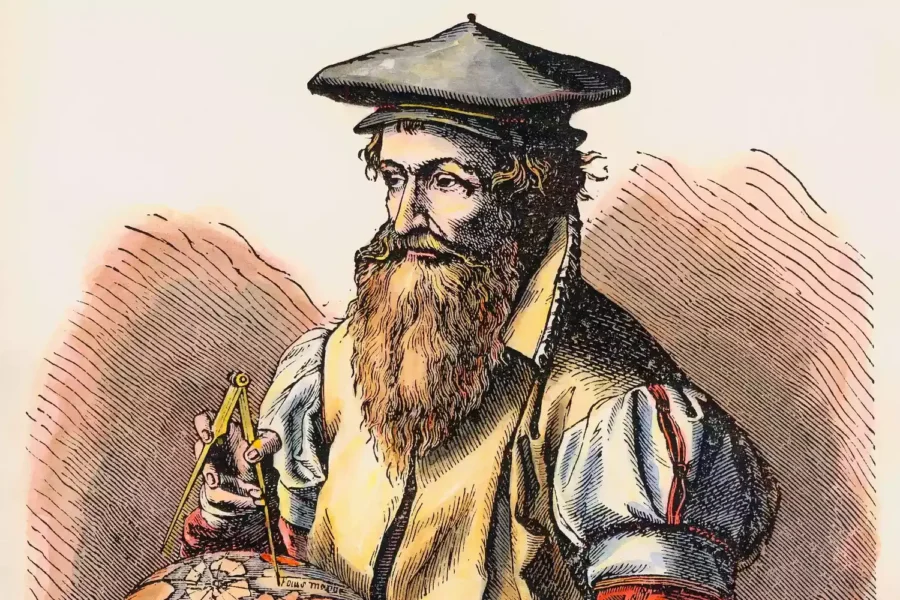
The Mercator Projection, developed by Gerardus Mercator in 1569, remains one of the most famous innovations in cartographic history.
It was designed as a navigational tool for sailors, yet its use of straight lines for longitude and latitude was also a feat of artistic composition, showcasing the balance between function and aesthetics.
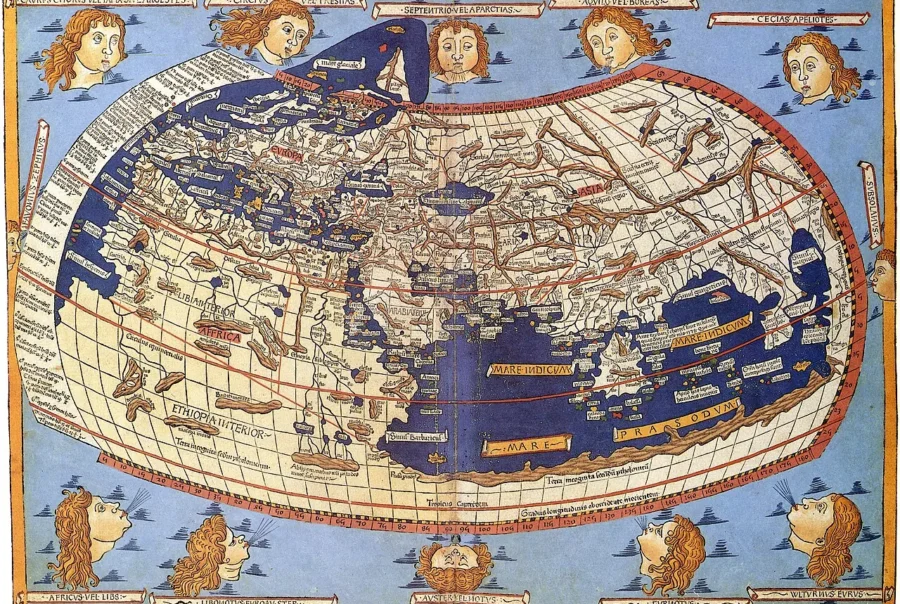
Renaissance maps often included ornate borders, detailed depictions of animals and mythological figures, and artistic flourishes that reflected the period’s artistic ideals.

Artistic Influence:
- Linear Perspective: The use of linear perspective, a hallmark of Renaissance art, was incorporated into map design. This helped create the illusion of depth and dimension, which gave maps a more realistic and three-dimensional appearance.
- Humanism: Cartographers of this era were deeply influenced by humanist philosophy, which emphasized the importance of understanding the world from a human-centered perspective. This focus on human experience and observation led to maps that sought to represent the world in more scientifically accurate, yet aesthetically pleasing ways.
Baroque and Rococo: Ornate Cartography and Decorative Flourishes
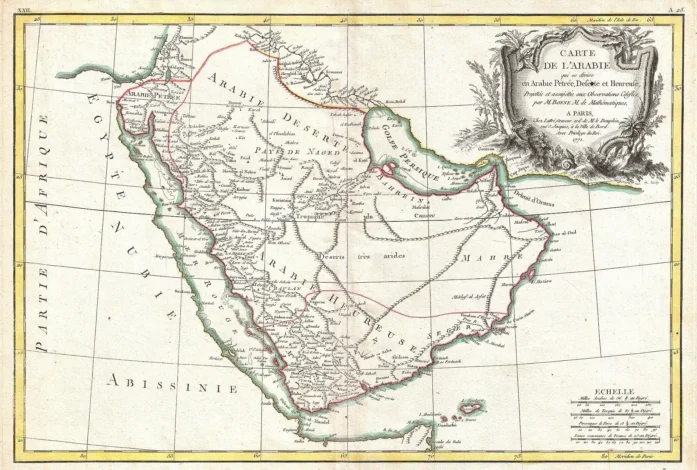
In the 17th and 18th centuries, the Baroque and Rococo art movements brought an even greater emphasis on ornamentation, drama, and elaborate details.
These artistic styles influenced map design by encouraging the inclusion of elaborate borders, lavish illustrations, and a sense of grandeur.
During this period, maps were often produced as luxury items, intended for the wealthy elite or royalty.
As such, cartographers and artists added decorative elements, such as lavish title panels, cherubs, and coats of arms, to reflect the opulence of the time.
The artistic sophistication of the Baroque and Rococo styles was not only intended to create visually stunning maps but also to reinforce the political power and influence of the patrons commissioning the works.
Artistic Influence:
- Emphasis on Detail: Baroque cartographers often included a vast amount of detail on their maps, not just in the representation of landmasses, but also in the decorative embellishments surrounding the map. Rococo design elements, such as flowing curves and intricate scrollwork, became common in map borders and title cartouches.
- Drama and Movement: Baroque art is known for its emphasis on movement and emotional intensity. This influence can be seen in the dramatic way maps were presented, with swirling borders, exaggerated shapes, and dynamic compositions designed to evoke a sense of grandeur.
The Age of Enlightenment and the Birth of Scientific Cartography
The 18th century, often referred to as the Age of Enlightenment, was marked by a surge in scientific and intellectual inquiry.
As new discoveries were made in geography and natural sciences, cartographers began to focus more on the accuracy and functionality of maps.
This period saw the emergence of scientific cartography, where precision and utility were prioritized over artistic flourishes.
Jacques-Nicolas Bellin, a French geographer, was responsible for the 18th century's highly accurate world maps and nautical charts.

However, this period did not mark the end of artistic influence on map design.
The intellectual environment of the Enlightenment fostered a new kind of aesthetic—the search for clarity, order, and rationality.
Enlightenment-era maps were often more stripped-down and focused on clean, systematic lines that reflected the intellectual ideals of the time.
At the same time, the use of engraving techniques allowed for greater detail and sharper lines, enabling mapmakers to present geographic features with greater clarity.
Artistic Influence:
- Postmodernism: In the digital age, map design has been influenced by Postmodernism, which rejects the notion of a single, objective truth. This has led to the creation of maps that reflect subjective interpretations of space, with non-traditional projections, exaggerated features, and playful use of colors and shapes.
- Interactive and Visual Art: With the rise of digital mapping, the boundary between art and cartography has become increasingly blurred. Interactive maps that allow users to explore data in new ways are now commonplace, and these maps often incorporate elements of visual art, design, and storytelling.
The art of map-making is a dynamic and ever-evolving field, influenced by changing artistic movements, technological advancements, and cultural shifts.
From the precision of Renaissance cartography to the abstract experimentation of Modernism, the influence of art on map design has been profound and multifaceted.
As we move further into the digital age, the relationship between art and cartography continues to evolve, offering new opportunities for innovation and creative expression.
Maps are more than just tools—they are reflections of the worldviews, cultural values, and artistic styles of their time.
By understanding the artistic movements that have shaped map design, we can gain a deeper appreciation for the maps we use today and their role in our understanding of the world.
Topographic Maps – An Introduction